GPT
I’m going to assume a wheeled road vehicle, because that is the hardest ordinary case. If the architecture turns out to be rail or maglev, my answer gets easier. I would define “sealed for life” as no scheduled opening or fluid change over something like 15 to 20 years and 300,000 km, not eternity.
The first hard truth is that “recovers its own energy” cannot mean recovering energy after it has become tire heat, brake heat, gear oil heat, bearing heat, or aerodynamic turbulence. That is gone in any practical sense. We can recover kinetic energy before it is dissipated, and gravitational potential energy on descents. We can also avoid creating losses in the first place. Anything stronger than that is not physics.
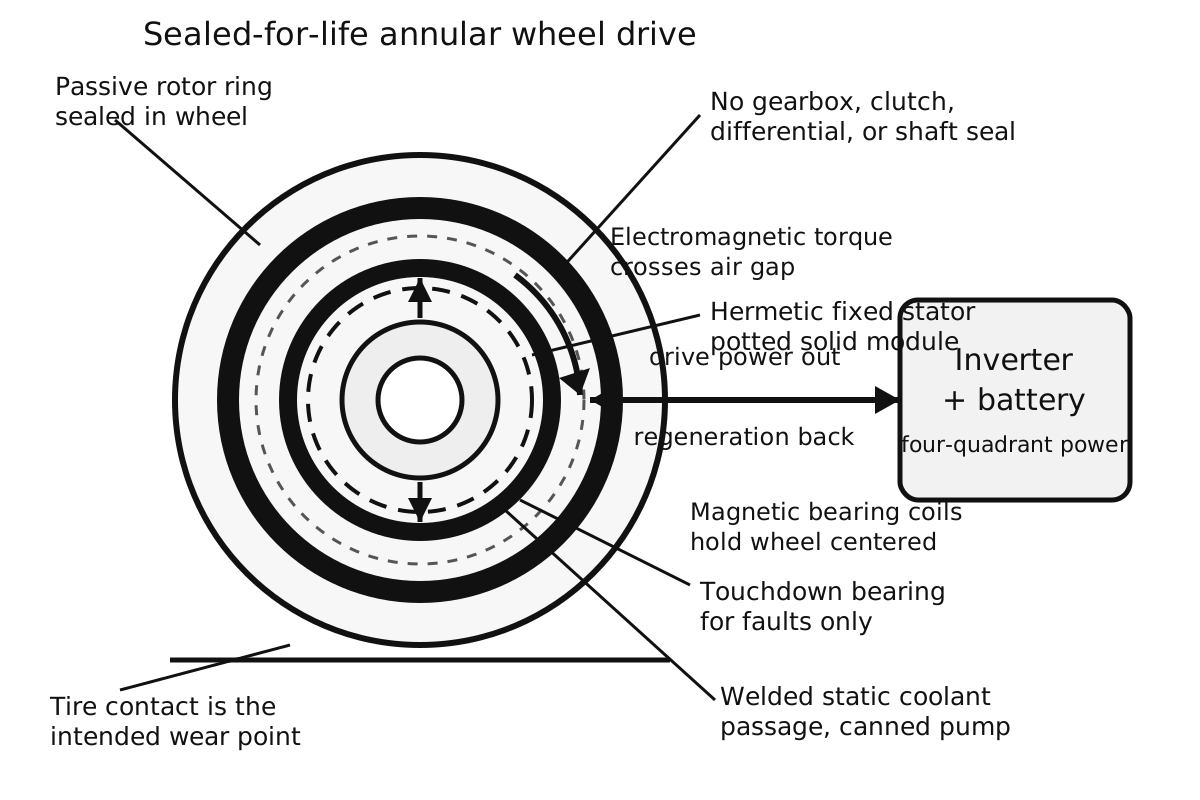
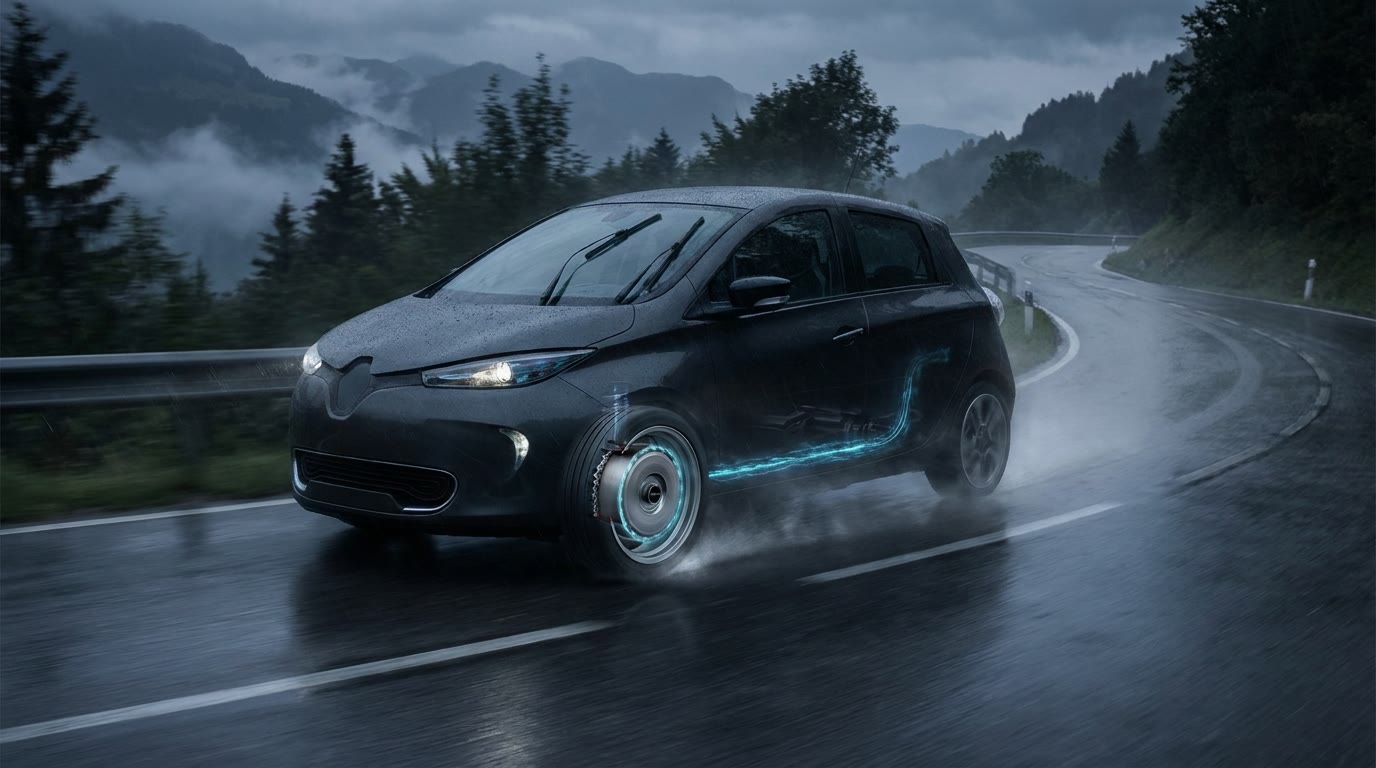
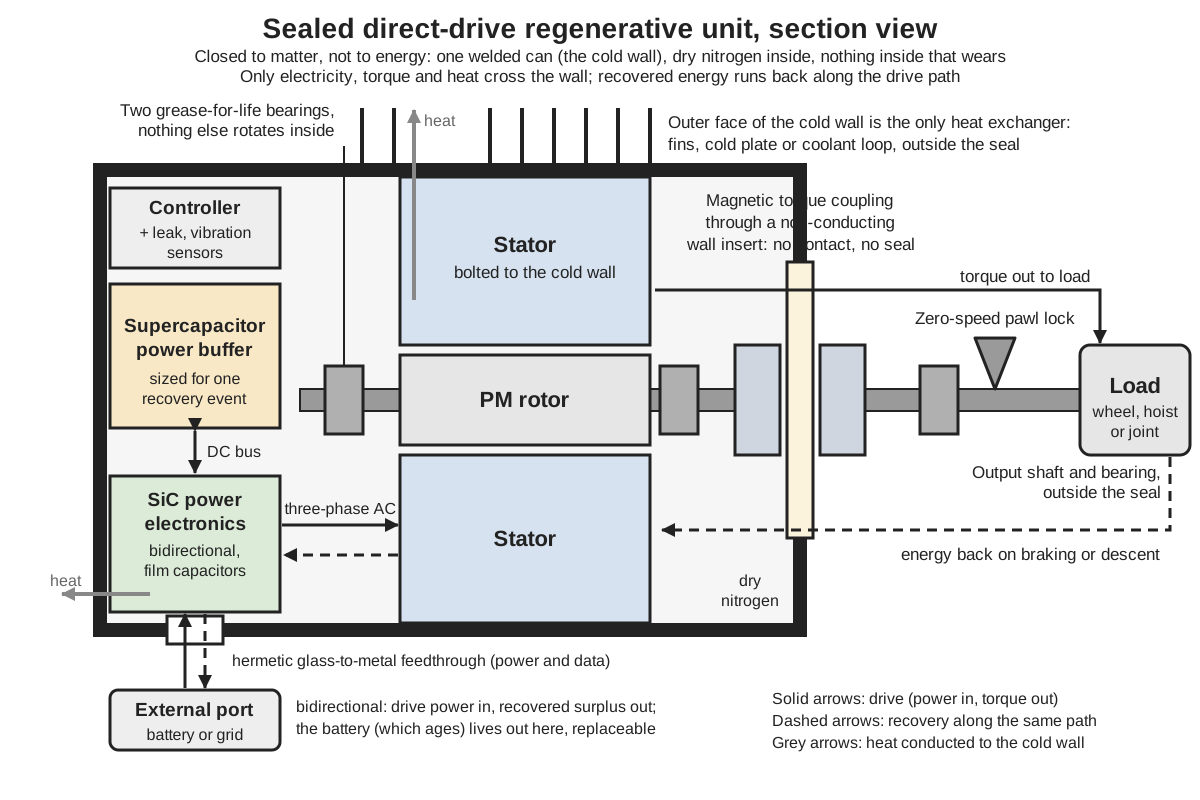
My mechanical design is to delete as much mechanical drivetrain as possible. No multi-speed gearbox, no clutch, no belt, no chain, no differential, no driveshaft seals, and no friction brake in normal operation. Each driven wheel gets an annular direct electric drive: a stationary sealed stator on the upright, and a passive rotor ring built into the wheel or hub. Torque crosses an air gap electromagnetically. The only intended contact in the torque path is tire to road.
That claim is proven today in principle: direct-drive electric machines, sealed stators, and regenerative operation are all real. Packaging them as a compact, affordable, sealed-for-life road wheel module is plausible with work, not proven at mass-market scale. I would still choose it because every conventional transmission part we keep becomes a wear, lubrication, or sealing problem.
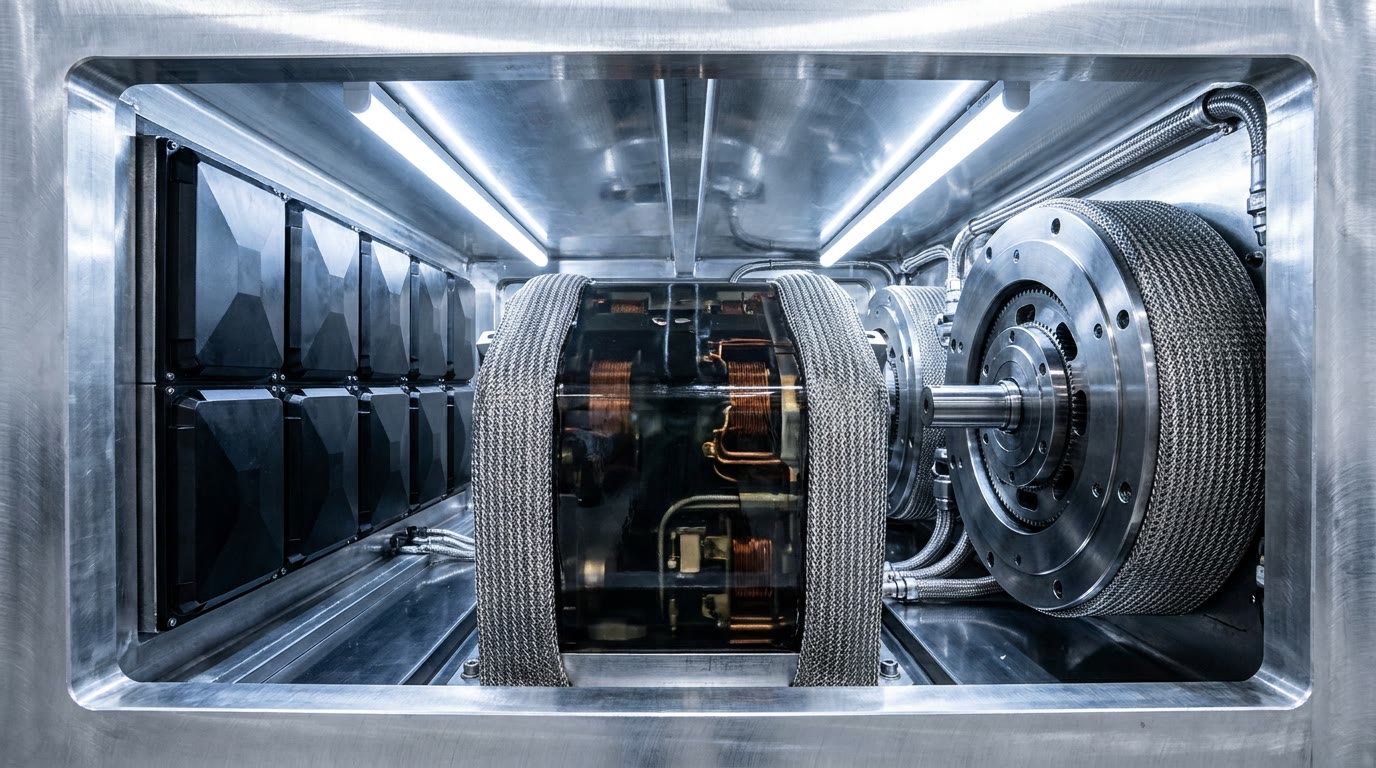
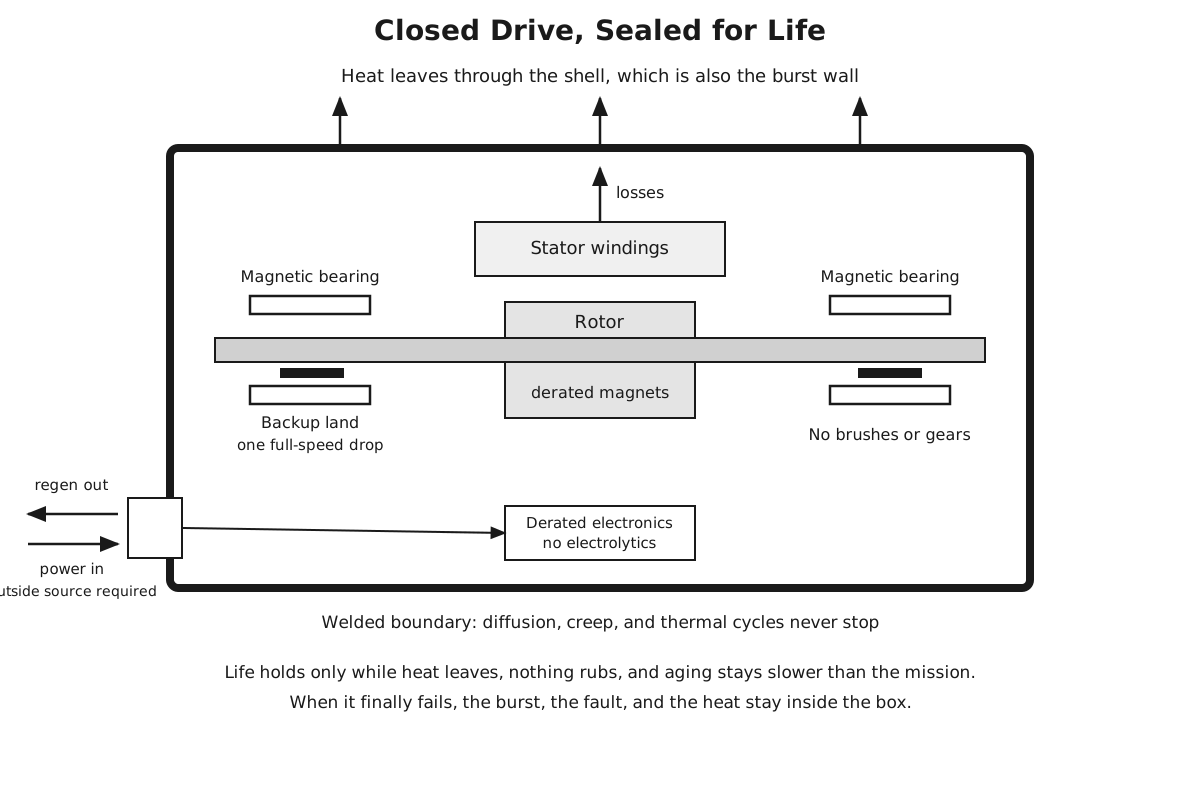
The stator is a hermetic solid module, not a machine with an oil-filled cavity. The copper and laminations are potted into a thermally conductive, electrically insulating compound. The casing is welded aluminum, stainless, or titanium, with ceramic or glass-to-metal electrical feedthroughs. Coolant passages are static and welded into the housing. No rotating shaft crosses a wet boundary. The rotor is a magnet or reluctance ring encapsulated against corrosion with a carbon-fiber, stainless, or titanium sleeve. The air gap itself does not need to be a sealed fluid volume; the active parts on both sides are sealed solids. A noncontact labyrinth and debris shield keep stones, salt, and mud out of the gap.
This is where I would be strict: I would not rely on a rubber rotary shaft seal and call it sealed for life. Static seals can be made extremely durable. Welds and ceramic feedthroughs can be hermetic. Dynamic seals age, score, heat, and eventually leak. Canned pumps and magnetic couplings are proven today; lifetime road-vehicle shaft seals are not something I would build the design around.
The bearing problem is the hardest mechanical problem. A literal “nothing to wear out” wheel drive means the wheel cannot run on ordinary rolling bearings in normal operation. My no-wear target is an active magnetic bearing system integrated with the wheel motor. Permanent magnets provide bias force, controlled coils trim the radial and axial position, and position sensors hold the rotor centered. Rotation is motor torque; support is magnetic suspension. Touchdown bearings exist only for faults, startup service, or emergency stopping. When parked with power off, the vehicle can settle onto static supports that do not rotate and therefore do not wear in the usual sense.
Active magnetic bearings are proven today in flywheels, compressors, and other rotating machinery. Carrying road-wheel loads and pothole shocks this way is a bet. The force levels are not magic; magnetic pressure at practical flux densities is enough if the area is large. The difficulty is shock tolerance, cost, control stability, contamination, fail-safe behavior, and mass. For a smooth guided vehicle I would call it plausible with work. For a normal car hitting potholes at speed, I would call full magnetic wheel support a serious bet.
If the team wants a nearer-term build, I would fall back to a large-diameter hybrid ceramic angular-contact bearing cartridge with lifetime grease, low preload, hard coatings, and noncontact shields. I would add magnetic unloading so the bearing carries much less average radial and axial load. That is plausible with work. But I would not pretend it has “nothing to wear out.” Rolling bearings fatigue. Grease ages. Shields admit some contamination over enough years. It can be very good; it is not wear-free.
For braking, the motor must be four-quadrant by default. There should be no one-way clutch, freewheel, or mechanical disconnect that prevents regeneration. Anti-lock and stability control should be done by commanding torque at each wheel. A friction brake still has to exist for legal stopping, parking, and electrical failure, but it is not part of ordinary energy management. It can be sealed and sized for rare use. If it is used often, it wears; there is no way around that.
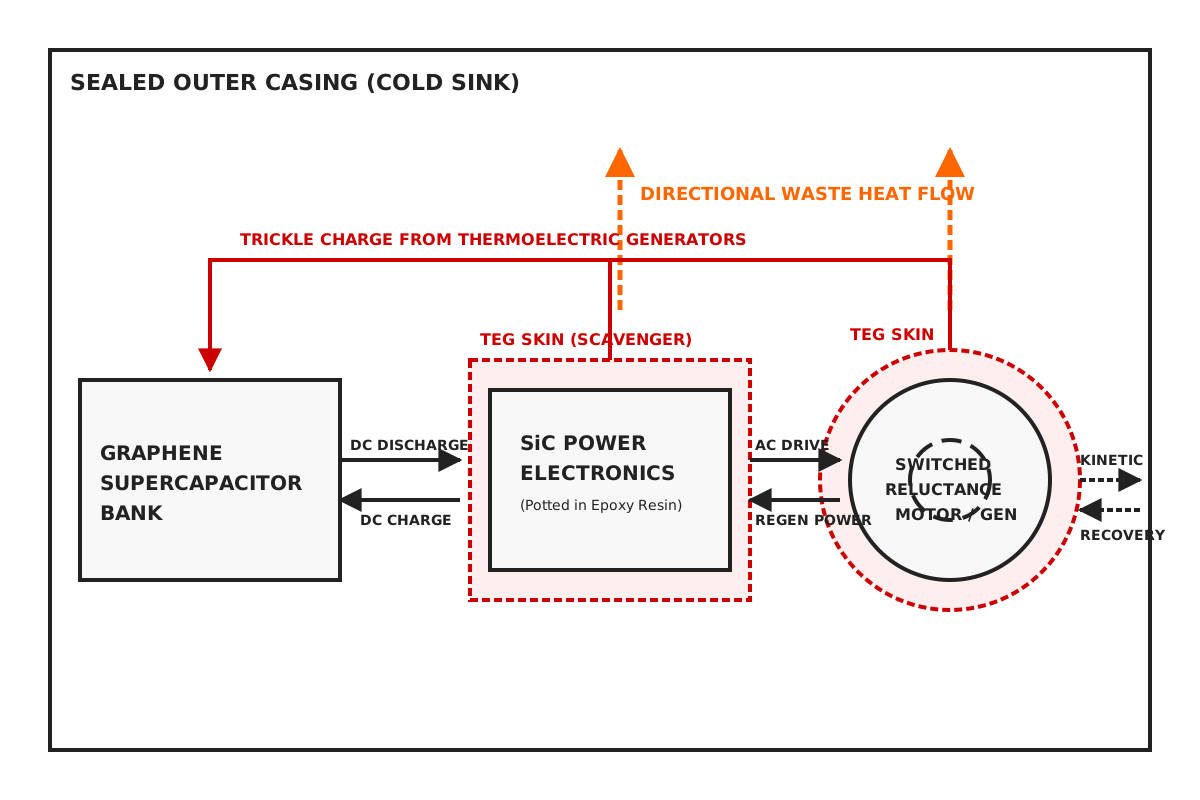
I would also avoid a conventional differential. Independent wheel torque is cleaner mechanically and better for recovery, because each tire can be kept near its traction limit without dragging the others into slip. Tire slip is unrecoverable heat. So the mechanical design should help Gemini’s electrical system recover energy by giving it a reversible, low-inertia, low-friction path at each wheel.
If higher wheel torque is needed than a direct rim motor can provide, my second choice is a contactless magnetic gear integrated into the motor. Magnetic gears and magnetic couplings are proven in prototypes and some industrial uses; high-torque automotive packaging is plausible with work. They are larger and more expensive than steel gears, but they remove tooth wear, gear oil, and dynamic oil seals. I would use them only if direct drive cannot meet torque and thermal requirements.
The coolant loop, if needed, stays closed and static at the pressure boundary. Expansion is handled by a metal bellows accumulator. A pump, if used, is a canned wet-rotor pump inside the loop, not a shaft-sealed pump. Moisture getters, pressure sensors, and leak-before-fail cavities can tell us if the module is dying without opening it. Welded static containment and canned pumps are proven today.
My bottom line is: the most reliable sealed drivetrain is the drivetrain we delete. The clean mechanical answer is electromagnetic torque across an air gap, static hermetic sealing, no gearbox, no clutch, no dynamic shaft seal, no routine friction braking. Proven today: the underlying motors, regeneration, hermetic static sealing, canned pumps, and magnetic bearings in industrial machines. Plausible with work: a sealed-for-life annular wheel drive with conventional or magnetically unloaded bearings. A bet: a true no-contact road-wheel module that levitates on active magnetic bearings through real-world shocks.
I would rather state that bet plainly than hide a normal bearing and call it wear-free.